The Benefits of AI-Powered Digital Inspections
In today’s digital age, AI is successfully identifying and grading structural degradation at a much higher precision than any human. Using vast amounts of data and high-resolution scans, platforms like Abyss Fabric™ can make inspection easy. What once yielded subjective observations now produces standardized and repeatable health assessments driven purely by data.
Historically, evaluating the integrity of offshore facilities has relied heavily on manual walkdowns. These methods are frequently hindered by physical reach limitations, a single point of view, and the subjective nature of human observation. By integrating artificial intelligence with advanced reality-capture technologies, there has been a shift in how industrial assets are logged and repaired. It has gone from a manual chore to a highly precise, data-driven process.
Stepping Beyond the Human Eye
For decades, asset management in the energy industry has been defined by high-risk maneuvers and manual guesswork. For engineers, it was a constant balancing act between safety and cost. But the landscape has shifted. With the arrival of autonomous inspections, we’ve moved past the era of ‘tricky and dangerous’ feats. We are now entering an age of precision, where AI-driven data doesn’t just cut costs, it eliminates the margin for human error. Here’s just some of the benefits:

Enhanced Safety
- Keeps Personnel out of Harm’s Way: The technology drastically cuts down the time workers need to spend in hazardous offshore environments.
- Overcomes Physical Barriers: By utilizing remote capture methods, the system easily inspects hard-to-reach areas.
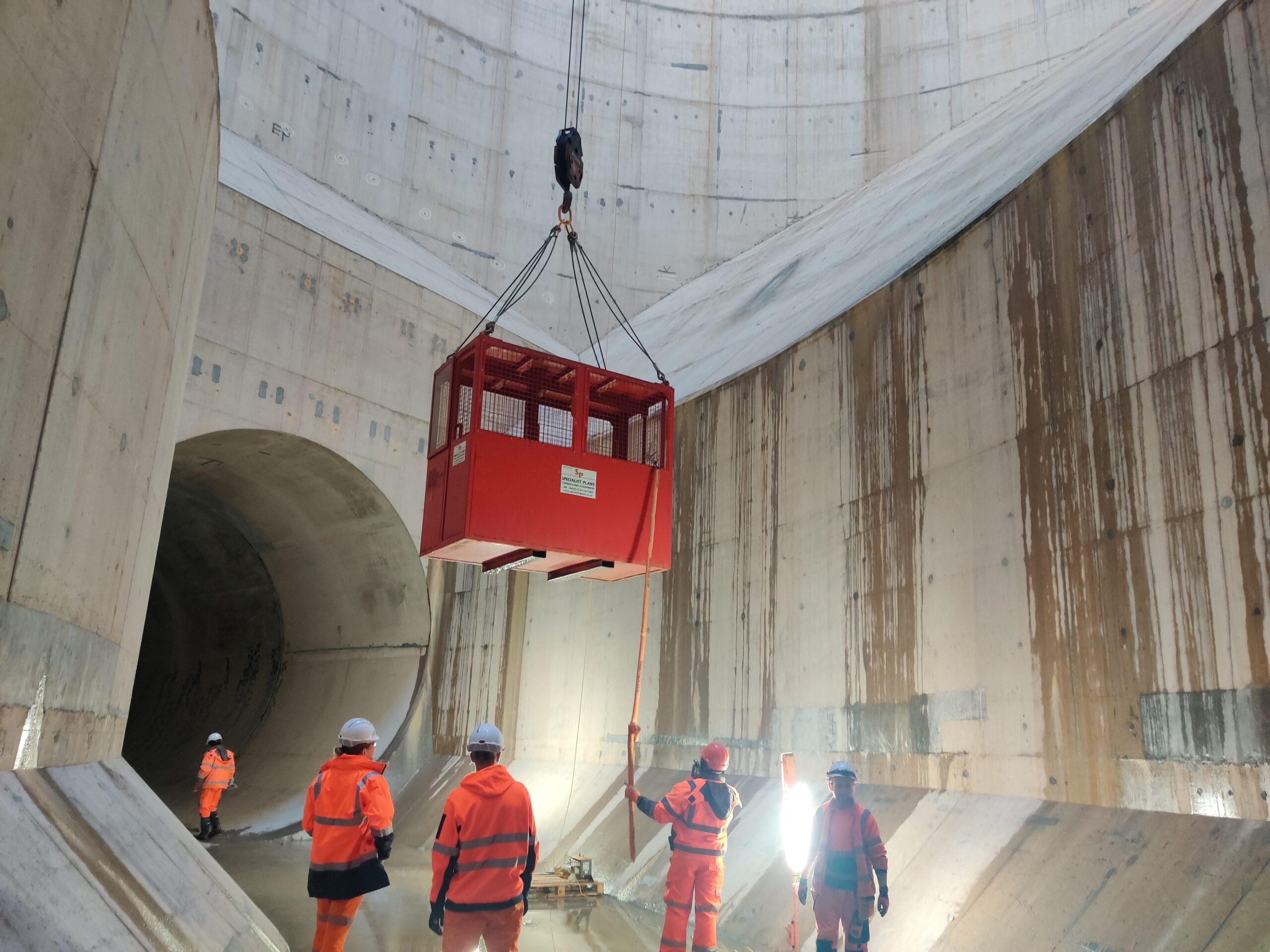
- Minimizes Scaffolding/Rope Use: Because the technology captures data remotely and from multiple angles, you don’t have to build extensive scaffolding or use ropes to inspect ceiling lines.
Much Better Coverage
- Micro-Level Zooming: Instead of relying solely on what an inspector can see from a distance, the system provides zoomable digital views.
- Multi-Angle Verification: Anomalies are confirmed from multiple perspectives.
AI-Driven Accuracy
- Eliminates Subjective Guesswork: The AI automatically quantifies the surface area of defects and categorizes their severity. The same algorithm is run on every scan instead of different inspectors, so there’s no room for any subjectivity whatsoever.
- Reduces Human Error: By relying on automated algorithms and high-resolution spatial data, the risk of missing a defect or misjudging its severity is kept remarkably low.
- Standard Compliance: The automated assessments follow established industry frameworks such as ISO 4628-3.
Streamlined Planning
- Permanent Digital Records: Every scan creates a lasting digital baseline of the facility’s condition, essentially creating a system of record
- Optimized Maintenance Budgets: By generating an accurate, prioritized scope of work based on actual risk, operators can allocate their maintenance spending much more effectively.
Abyss Fabric: What we Offer
Abyss Fabric fundamentally rewrites the economics of asset integrity. While image-only systems offer a basic visual record, they fall short in critical defect detection because 2D photos inherently lack depth. A flat image makes it nearly impossible to accurately measure what could be a defect that leads to a disaster. Abyss Fabric transcends this limitation by deploying AI within a highly accurate, measurable 3D digital twin. Instead of just spotting a visual anomaly in a gallery of photos, Fabric has the ability to precisely calculate the exact geometry of a defect. It’s a system of record that delivers two key solutions that convert raw visual data into actionable insight. Here’s some of its flagship features:

Solution 1: Coatings Manager – Fabric Maintenance at Scale
Corrosion is the single largest destroyer of asset value. Traditionally, Fabric Maintenance (FM) campaigns are planned based on manual condition assessment surveys. The Coatings Manager module replaces human estimation with algorithmic precision.
- Coating Condition Assessment: The system utilizes either ISO 4628-3 or any other client specific regulations and requirements as its basis for calculation of rusting degree/scale (Ri0 to Ri5). Operators can now understand their entire platform and use Fabric analytics to prioritize the worst areas.
- Fabric Maintenance Prioritization: By getting the exact square footage of critical Ri4 and Ri5 defects, the system calculates the total area that needs to be painted. This allows operators to have a good estimate on how much paint is needed for remediation.
Solution 2: Pressure System Integrity Management (PSIM) – Risk Prioritization
Pressure systems represent the highest integrity risk on offshore and onshore facilities, where failure can directly impact safety, production, and cost. Traditional risk-based inspection (RBI) programs rely heavily on periodic visual inspections and historical data, often leading to over-inspection of low-risk assets and missed prioritization of emerging risks. Abyss Fabric’s PSIM capability enhances this workflow by introducing data-driven, line-level risk prioritization based on actual asset condition.
- Defect-Level Intelligence: PSIM moves beyond subjective visual assessments by categorizing and quantifying corrosion at a defect level, including blistering, scab scaling, and coating breakdown. This enables Integrity Engineers to distinguish between surface-level coating degradation and integrity-critical instances of wall loss.
- Smart Scheduling: By leveraging AI-based defect detections, the remote visual inspection in PSIM enables inspection crediting for clean and low-risk lines (e.g., Class 4 utilities), eliminating unnecessary inspections and redirecting budgets toward higher-risk components.
- Opex Reduction: By leveraging at-height inspection data and validating asset condition remotely, PSIM minimizes the need for rope access and scaffolding. This enables operators to reduce rope access spend by up to 80%, without missing any critical areas.
The Path Forward: The R&D Vision

At the core of Abyss’s innovation is an integrated AI and Computer Vision framework built on industry-leading tools and proprietary logic layers. The R&D vision is continuously pushing toward full autonomy.
- Advanced Architecture: Abyss has pivoted from standard architectures and upgraded the methodology behind how our advanced AI is trained. By using self-attention mechanisms, the AI absorbs the data, learning the defining features of corrosion with minimal human intervention.
- Abyss Sentinel Anomaly Detection: Standard AI finds what it is trained to look for. Abyss Sentinel is trained instead on what “normal” looks like. It flags any deviation for human review, continuously learning and extending its definition of normalcy with every deployment.
- Autonomous Remediation: The ultimate goal is closing the loop from detection to remediation. Abyss is developing dynamic digital twins designed to direct fleets of autonomous Fabric Maintenance Robots. With defect maps, Abyss Fabric will serve as the brain for robots performing hot works, grinding, and painting in hazardous environments.
Conclusion
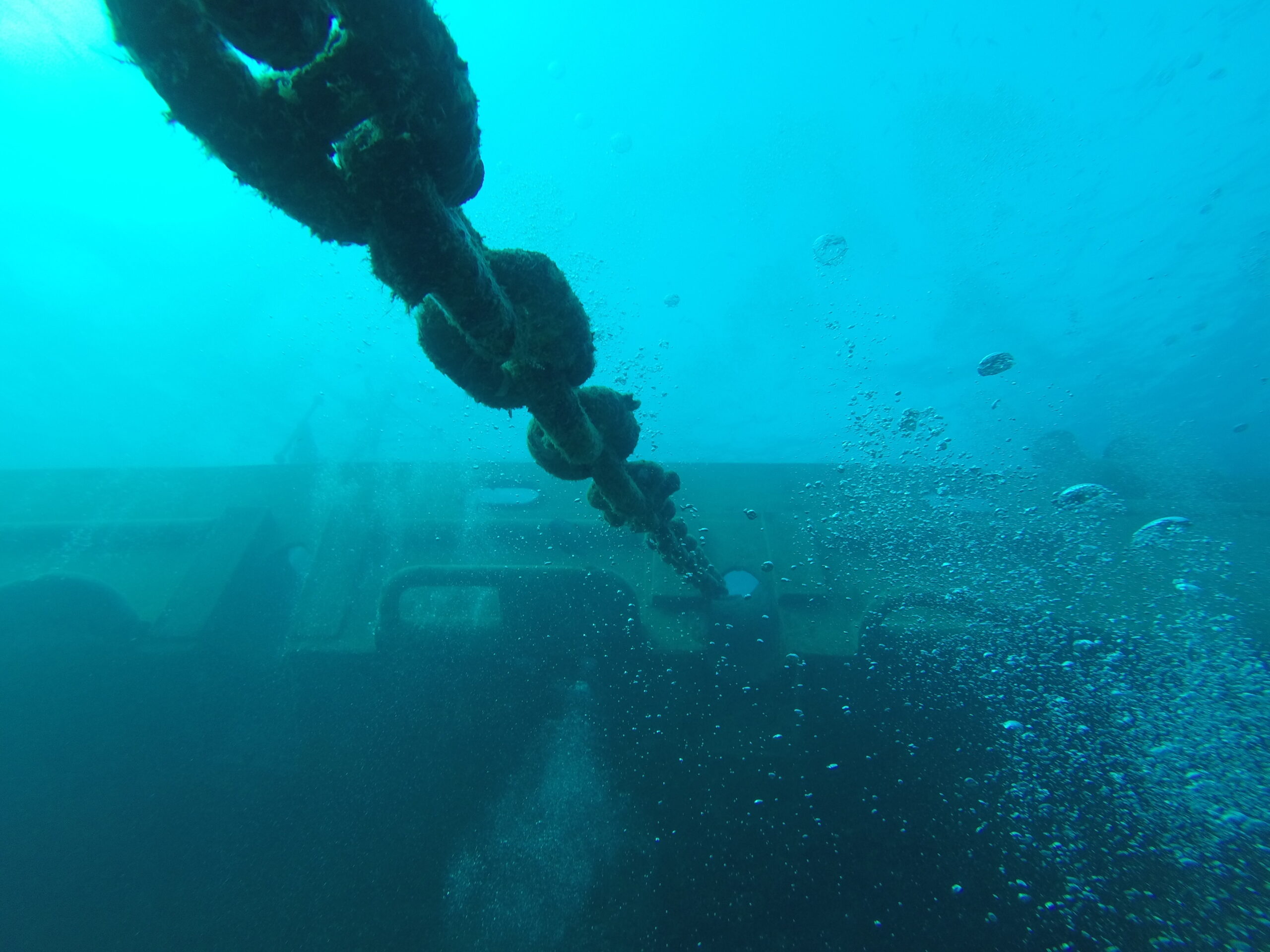
The transition from manual GVI walkdowns and physical caliper measurements to 3D-capture technologies aided by AI is fundamentally changing how asset integrity is managed. Whether you’re planning topside work or inspecting underwater chains, using tools like Abyss Fabric™ and underwater ROVs gives you a clear, data-driven starting point.
Operators can replace subjective visual guesswork with mm-level accuracy. This direct link between reality-capture data and component-level risk prioritization, significantly reduces personnel on board, and optimizes overall OPEX performance. The technology has come a long way to make lives easier and it’s getting better every day.